Still Coughing Up Thick Mucus Every Morning? Your Lungs Might Be Trying to Warn You.
If mucus keeps building in your chest and you're waking up wheezing or gasping, this may be an early warning sign of COPD — see the at-home method before it gets worse.
Learn the Home Ritual →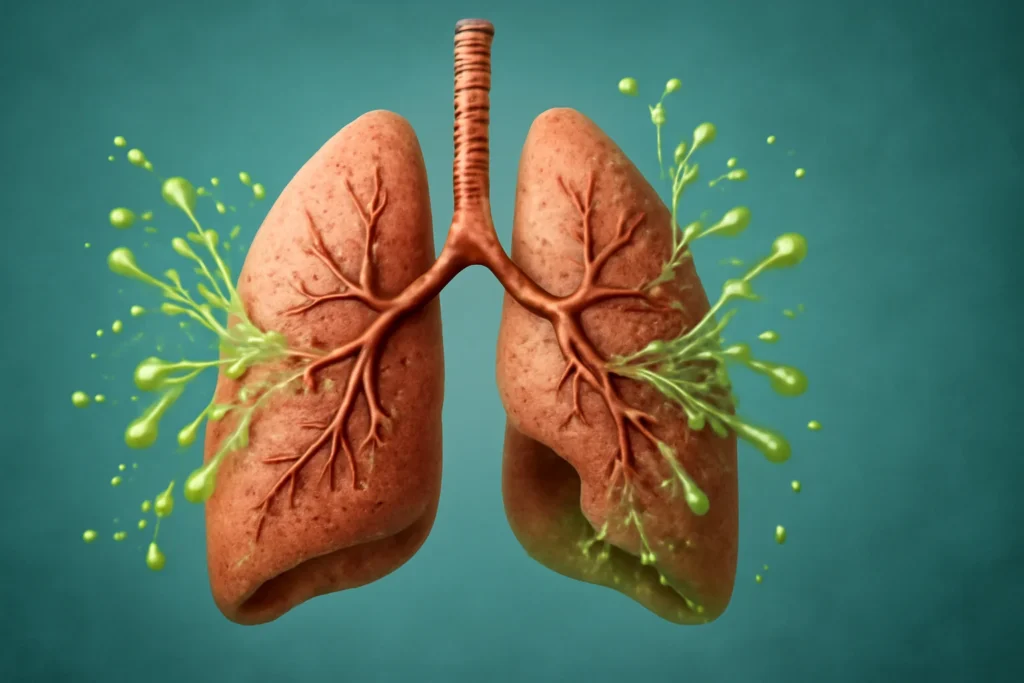
You already know the feeling:
🔸 Waking up needing to clear your throat before you can even talk
🔸 A chest that feels "heavy" or tight, especially in the morning
🔸 Mucus that just won't move, no matter how much you cough
🔸 Getting winded walking across a room — and calling it "just getting older"
Most people brush it off. "It's just allergies." "It's the weather." "I'll just use my inhaler and push through."
But that's exactly what keeps people stuck. Because the real problem isn't the discomfort — it's what happens when it quietly starts shrinking your world. You stop taking stairs. You stop going out. You start planning your day around your next breath.
When mucus keeps building and airflow keeps getting harder, it can be an early sign of COPD — and the earlier you catch it, the more control you have.
See the Early Warning Signs →⚠️ One "normal" day is often the tipping point
Here's what almost nobody tells you: this rarely stays the same. It tends to move in stages — and it usually only takes one ordinary day to flip it:
- • Walking too far without stopping
- • Sleeping flat on your back
- • Breathing cold or dry air
- • Skipping water and trying to "cough it out"
And once that happens, it can spiral into something people never expect when they think it's "just a little shortness of breath":
🚨 Chest tightness that won't ease up
🚨 Wheezing that gets louder and more frequent
🚨 Mucus that thickens and won't clear
🚨 Waking up gasping in the middle of the night
🚨 A flare-up serious enough to need urgent care
And here's the part almost nobody talks about: when thick mucus sits in the lungs and irritation stays high, it creates the perfect environment for infection — which makes every flare-up more likely to trigger the next one.
That's why chasing one symptom at a time so often turns into a loop: relief… then it's back… sometimes worse. But when you focus on the deeper pattern — calming irritation, helping mucus clear, and supporting oxygen exchange — you give your body a real chance to stabilize instead of constantly "putting out fires."
Before It Escalates — See the Method →⚡ A simple at-home reset is changing this for people
A growing number of people dealing with COPD symptoms and chronic bronchitis are using a simple 30-second at-home reset — no inhaler, no drugs, no equipment — at the very first signs of tightness, wheezing, or "air hunger."
It's not about pushing air in harder. It's about helping the lungs clear built-up mucus and irritation naturally, so oxygen can move the way it's supposed to.
People are using it to feel relief from:
- • The fear of getting winded in public
- • Constantly "checking" their breathing
- • Thick mucus that won't move
- • Waking up at night coughing or wheezing
- • Always needing a puff "just in case"
And it has nothing to do with:
- ❌ Random DIY hacks that irritate the airways
- ❌ Harsh detox trends that make coughing worse
- ❌ Expensive gadgets or complicated equipment
- ❌ Forcing deep breaths that can trigger panic
- ❌ Waiting until it becomes a full-blown flare-up
When you know what to do at the very first signals, it's much easier to stay steady — instead of constantly reacting after things spiral.
Watch the At-Home Method →